
He was born in 1922, in Poggio Moiano, Province of Riete. Son of Pietro Papili and Rosa Morigi. He arrived in San Vito in May 1952. His arrival in Costa Rica was to work with the company CICAIL (Italo Costa Rican Agricultural and Industry Company), in Moravia de Chirripó. From there I went to work in the Colonia de San Vito. And in June 1952, together with 9 other pioneers, they started the Colonia de San Vito. They were: BRACONI Giovanni, CANALINI Vittorio, GERVASONI Attilio, LUPPI Guido, PAPILI Marino, SANSONETTI Giulio, SANTILLI Giovanni, SCIARPELLETTI Riccardo, SORESINA Francesco. They were accompanied by the Catholic priest Father Maggione Virgilio. He met in September 1952, with his wife Paola Santilli Principessa, born on December 23, 1927 in Poiggio Moiano, Province of Riete, and his children Antonio and Angelo. Later in San Vito they were born: Eva and Antonieta. His family was one of the first three to arrive in San Vito, living temporarily in one of the first three houses built in the nascent colony. He was the first to take land near the Jaba River. He made lanes and it turned out to be 33 hectares, so they had to assign 20 hectares to him and 13 hectares to his wife Paola. It was an exceptional case since the maximum was 20 hectares per family. They were coffee farmers, pig farmers, grocery merchants, butchers, rice pulpers and producers of panela cane candy. He was a member of the Board of Directors of Coopro San Vito for many years.

1era casa Papili Santilli. Luigi y Marino Papili, Paola, Antonio y Angelo.

Antonieta, Eva, Paola, Angelo, Marino y Antonio.

Marino, Antonio, Domenico, adelante Eva

Paola Santilli sus hijos Angelo en brazos y Antonio Bruna Cianfanelli, su hijo Vera Brugioti, Luiggi, Piero e Oretta Antes abordar a Costa Rica

Paola Santillo,Tonino Eva (la bebe del centro)Marino Papili y Angelo.
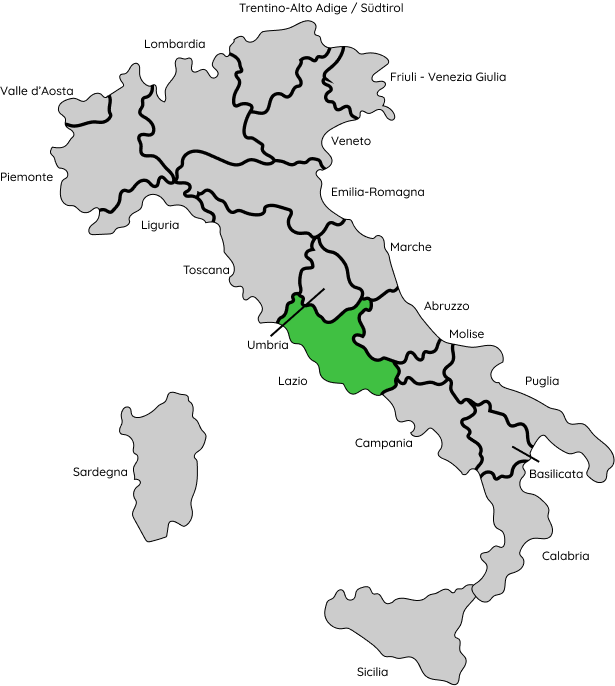
In mid-1945, at the end of World War II, Italy had been devastated by destruction. This forced thousands of people to emigrate to other countries in search of work and a new future. My father, Marino Papili, after having served in that war and been held prisoner by the Germans, was finally freed and returned to his beloved homeland. He weighed only 90 pounds. In our hometown of Poggio Moiano, founded in 1085 and situated high in the mountains of the Lazio region, my father met a noble, courageous, and beautiful young woman who would become his beloved wife for the rest of his life: Paola Santilli, my mother. After a courtship that reminds me of William Shakespeare’s Romeo and Juliet, they married. From that blessed union, my brother Antonio was born in 1948, and I, Angelo, in 1950. But the economic situation after the war forced my father to emigrate in search of work and a future for our family. He found an opportunity with an Italian timber company called Chica Hill, or something like that. The company took him, along with a small group of other Italians, to work in a rainy tropical rainforest in Costa Rica. Because of the climate and relentlessly hostile terrain, Chica Hill went bankrupt. Fortunately, the workers were taken on and employed by S.I.C.A. (Società Italiana di Colonizzazione Agricola, or Italian Agricultural Colonization Society). They thus became part of the 120 families of Italian pioneers who founded what was then called Colonia Giulia. Over time, it became San Vito del Río Java and, finally, San Vito de Coto Brus. In the summer of 1952, my mother, my brother, and I left our hometown to join my father in Costa Rica, along with other courageous pioneers. Under the leadership and administration of the Sansonetti brothers, they were establishing a new colony in that remote place amid the rainy forests of southern Costa Rica, very close to Panama. It was a long journey: Poggio Moiano (Rieti); Termini Station (Rome); Barcelona (Spain); Balboa (Panama); La Sabana (Costa Rica); Golfito; Corredores; Agua Buena; and finally La Colonia, which was only a small settlement. S.I.C.A. allotted us a plot of land, built the access road, and constructed our house. These assets created a debt that we had to begin repaying after three years, using the proceeds from our first coffee harvests, and continue paying over 20 years. With their courage, unwavering determination to build a better future, and admirable sense of responsibility, my parents worked tirelessly to escape poverty. What didn’t they do! We also ran a small general store beneath our raised house; later, we had an ox-powered sugarcane mill and a coffee crusher. The sugarcane mill was subsequently motorized. We had a rice huller, a coffee mill, and a pig farm with 84 pigs, which over the years became a small coffee-processing facility. Later, the sugarcane mill was modernized again with a boiler that I have no idea where my father found. Then came the butcher shop we ran in San Vito, with its rustic slaughterhouse on the farm in Bajo Java. In short, we worked hard and tirelessly for many years on numerous projects to achieve the longed-for prosperity of a better life. The official founding date of the Italian Colony was February 28, 1952. Many courageous Costa Rican workers arrived in search of employment or a plot of land and were immediately welcomed by the Sansonetti family as settlers or employees. Thus, the joint and fraternal work of Italians and Costa Ricans was a decisive and invaluable factor in achieving the progress and success of that beautiful dream and great project called SAN VITO. If we consider that 17 other attempts at colonization in Costa Rica failed, and add to this the horrors experienced by other colonies around the world, such as those in Somalia, the Congo, Haiti, and elsewhere, Costa Rica and Italy have every reason to be proud of their people—not only for San Vito’s success, but also for the great example of peace, work, brotherhood, and progress that our two cultures have given the world. Angelo Papili Santill
Copyright © Todos los derechos reservados al Museo San Vito de Java. Developed by Estudio Deso...